Please email us if you have any notes on this book!
Email us your feedback at minor-csbb@tudelft.nl.
Welcome#
Welcome to the textbook for the Collaborative Science for Biomedical Breakthroughs minor. This textbook was designed to guide supervisors, coaches, and students on their journey of becoming a scientist. We are using the metaphor of a boat journey as a fun and hopefully helpful metaphor of different steps and milestones of your project, and because Johanna likes boats. The teaching team, supervisors and coaches are available to provide guidance, but this is your journey.
This textbook provides an overview and explanation of the different workshops within the minor. It also includes some resources and thought-provoking questions to inspire interesting discussions. Each chapter is organized to cover the topics of a given week and provide navigation markers for our journey. It also includes information about the weekly assignments both individual and group.
On your own: Introduction
For people who want to use this book outside the minor we have added a few notes throughout to help you. Look for the “On your own” headers. We can’t provide the content of the workshops, but this guide can help you identify what you need to learn and what questions are helpful to think about along the way. If you are a teacher or supervisor using this to gather ideas, this book can help you identify things you might want to teach or think about. Often one of the hardest parts of becoming a researcher with collaborative skills is identifying and learning the skills you didn’t know you needed. This book is organized for those who are developing a research question, research grant application, doing the project and finally writing a paper about the research. We’ve put the workshops, questions, etc in the order that we think they most naturally come up as you’re doing such a project. Your order might be different; this is a starting point. It will hopefully help you ask the questions you need to develop better answers.
The participants in the minor’s Learning community include:
• The teaching team — thread leaders and developers who constructed this framework and give workshops. They have expertise in the durable skills being taught, and through the minor are learning more. They are always available for questions via email.
• Supervisors — scientists and researchers who supervise a group of students to help design realistic projects. They have expertise in the process of designing research projects. They will ask a lot of questions but provide few answers. They are also learning more about collaborative research projects and supervising them.
• Coaches — PhD students who will serve as coaches for groups. They also have expertise in developing research projects. This minor is also a place for them to practice and develop their supervisory skills.
• Students — they are leading the content and research questions. They will become the experts on their topics. They also bring a variety of expertise from different programmes and life experiences to the whole minor. They are divided into teams (crews) who will work together to learn more.
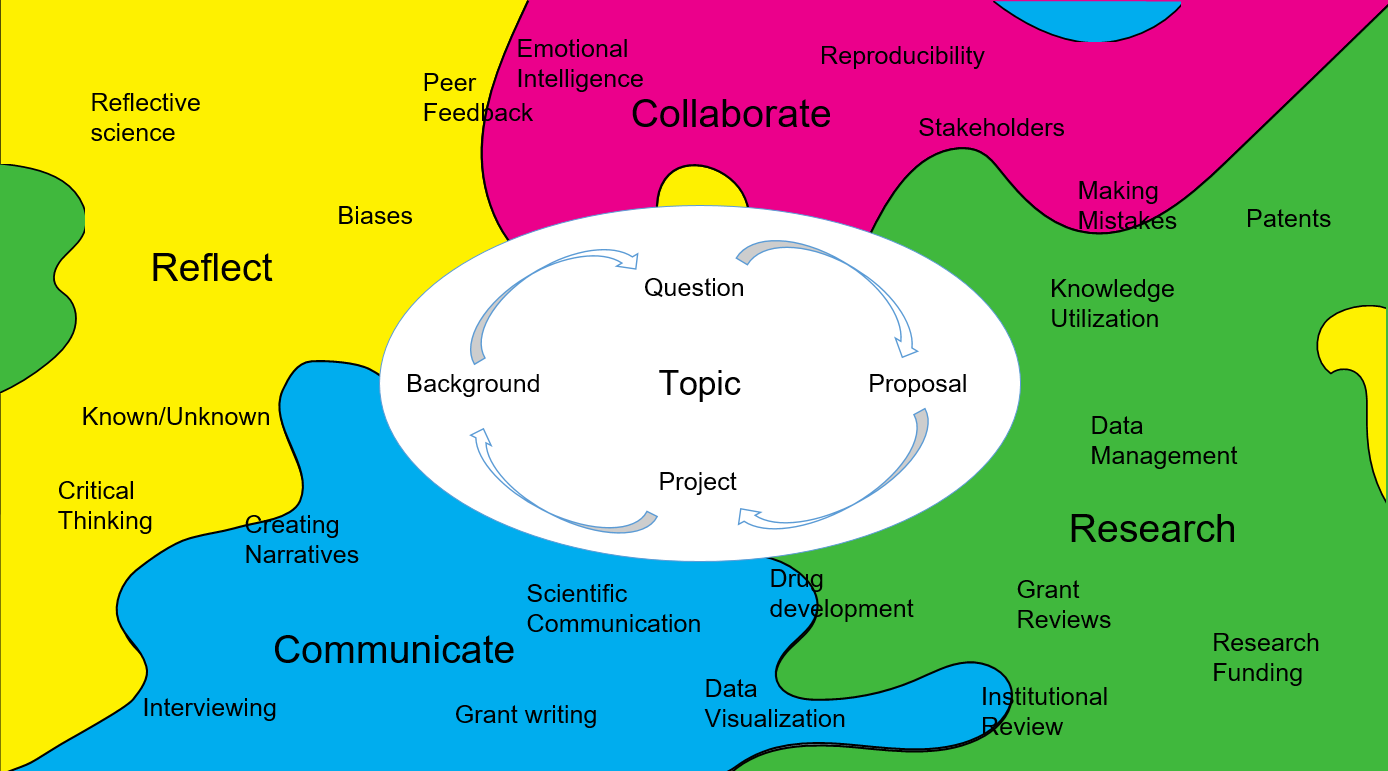
The Collaborative Research for Biomedical Breakthrough minor provides opportunities to do multi/inter/transdisciplinary research while learning necessary durable research skills. We explicitly teach the structures, networks and connections that are foundational to (scientific) research. The skills are organised and grouped into four intertwined threads:
(i) Collaboration — brainstorming, project planning, group dynamics
(ii) communication — reports, posters, presentations,
(iii) research — data safety, grant writing, etc and
(iv) reflection — critical thinking, ethics.
You will practice and develop the implicit skills and knowledge that scientists in any discipline are expected to have, and which really are useful in almost any work field.
Supervisors and coaches can also further develop their skills in these areas and develop collaborations with others.
The founding assumptions when we developed this programme:
Students and supervisors want opportunities to contribute to addressing important world challenges.
Including different disciplines and backgrounds creates better education and science.
Being able to do collaborative research on an entirely new topic requires a skill set and is necessary to be a successful researcher. These skills should be taught explicitly and require time and space for practice and development.
Programmes and students should not be afraid of failing — fail fast, learn fast.
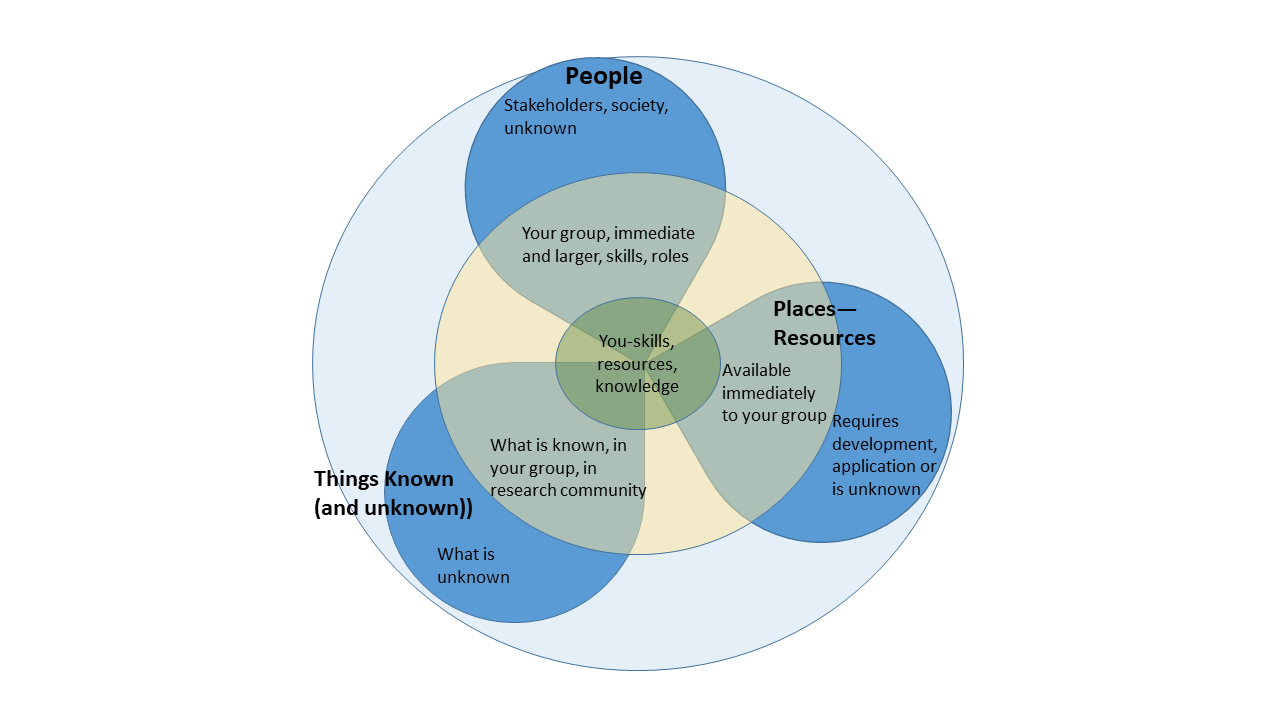
Fig. 1 One way to think about the research environment#
We want our students to develop understanding of the relational pieces of doing science, the people involved, the kinds of resources; how to communicate and collaborate effectively; and have the ability to reflect on all these elements in order to achieve impactful and excellent science.
Our Expectations#
When working in a collaborative environment, it is important to have clear expectations. These can help avoid misunderstandings and lead to more effective collaboration. We have some expectations of all participants (students, coaches, supervisors, teachers). We will discuss these expectations in the introduction day with time to discuss ones you’d like to add for the group, and later you’ll have time to develop your shared expectations for your crew.
Ask questions. Of yourself, your peers, and of the science. Think critically. Admit when you do not know. If something is unclear ask immediately.
Actively participate in all programme activities. Your voice, perspective and energy are crucial to the success of this community.
Be kind to the people around you. Help them out. Recognize we all have feelings, and they matter. Everybody will have different feelings and perspectives.
Be hard on ideas, making sure to separate them from the people. Think critically about your own ideas as well as the ideas of others. This is how we develop better ideas.
Challenge yourself, have the courage to step out of your comfort zone, and when someone around you is clearly challenging themself be supportive.
Nothing is really a failure. It’s a first attempt. Assess the results, if it didn’t do the thing you wanted it to do, try to figure out why it responded the way it did, try something different. If it affects other people, let them know, let them know what you’re going to do differently next time. Understanding unexpected results is a skill to master and learning from these is at the heart of science. Unexpected results are the key to discovery. There are really only two failures: doing the same thing over and over and expecting a different result or claiming something worked when it didn’t.
Take responsibility for your own messes—whether this is in the lab, classroom, in your relationships. If you’re not sure how to clean it up, ask for help. There’s nothing wrong with needing support. What causes real problems is trying to hide it, cover it up, or pretend it didn’t happen.
Take an occasional break. Science is never done. We need breaks so our brains can integrate what we have learned and produce innovative ideas.
Have fun. Science and learning should be fun, challenging work, but also fun.
Minor weekly structure#
Most weeks (except the first and last of each quarter) consists of two half days of scheduled activities in the form of interactive workshops and science spotlights focused on developing skills and broad knowledge. For scheduled activities we have specific learning goals and hopes for what students get from them.
Preparation: each week read that week’s chapter. Look at the discussion questions and keep them in mind as you go through the rest of the week.
Intro to the week#
Brief overview of what’s to come for the week, answer any questions, update on any changes. Usually this is done by the minor director and is about 15 minutes long. It’s a chance to check in, solve logistic challenges and help everyone stay on task.
Science Spotlight#
These are given by scientists in the Convergence flagship field (could be PhD student, post-doc or the PI). They are short (20 minute) research talks about what the scientist is working on. It is meant to be a bit inspirational and so students can see the breadth of research being done. It’s also a chance for students to ask questions about how and why the scientist came to this research question, what they hope for it, career path, how it’s funded, ethical questions. It is not expected that this is background for the student projects, but could spark curiosity or possibilities.
Preparation: know who they are. Look at their lab webpage. Think about any questions you have about their research. See if you can come up with a question relating to the workshops the previous week that you’d like to ask them.
Workshops#
These are generally 2-3 hours long on a skill or set of skills that we think are important. They are highly interactive and work best when everyone participates. They are designed to develop skills and materials necessary for your projects. The skills taught will endure long after the research project is finished. They are designed to help you develop the mindset to think more deeply and critically about your projects, collaborations and skills.
Meet with coach#
Each week student groups should meet with their coach. Students and coaches schedule these together (usually Monday or Tuesday). Students are responsible for planning the meeting. The meetings should be a place to evaluate what’s been done so far, knowledge gaps, and what are the immediate next steps are to move their project forward. Also identify problems and discuss them (these can be project or collaborational). You can always contact your coach at other times besides the meetings.
Preparation: plan the agenda, make a list of questions you need help finding answers to, make sure you have a location, and time communicated clearly.
Meet with supervisor and coach#
Each week student groups also meet with their supervisor and coach. Students are responsible for planning and leading the meetings. These meetings should be more project focused: is the research question being developed a good one. Are the experiments we’re developing going to answer our question. Discuss the group assignment of the week.
They should also be brainstorming about problems being experienced in the process and how to solve them. The supervisor and coach are there to help you figure out how to solve any problems, not give you answers. They expect you to have problems and will not judge you on having them. They definitely cannot help you if you don’t tell them.
Group-Study#
It is up to you and your group to plan your activities to do research and complete assignments. We expect weeks to be busy, and you will get out of this minor as much as you are willing to put into it. We have found that time together matters hugely to the success of a team. Discussing ideas to build a collaborative project takes time of being in the same room. We recommend planning at a minimum 10 hours per week of time outside of our scheduled activities when you’re in the same space with your group. Also include some social time. We recommend getting together to play games, do activities, just hang out at least once a week. Especially early on. It will often solve problems.
Self-Study#
Self-study in this minor is predominantly finding and reading scientific articles. We recommend at least 10 hours a week of this with a goal of 5-10 papers per week. If your group of 5 each reads 5 papers a week, that’s 25 papers for your group and you can learn a lot in that. Make good notes so you can share with your team. Reading together in the same room can be a good way to share as you go if that works for everyone. You will also spend some time writing, editing, analysing. And, of course, thinking and reflecting.
Friday Symposiums#
The Friday symposium is a key moment in each week for integrating learning from the week, identifying difficulties, brainstorming solutions and developing larger teamwork. They include participation from students, supervisors, coaches and the teaching team. They are a time of shared learning with no right answers. These are often where the best insights come in and the magic happens.
Generally, we try to divide the sessions in two parts—one more focused on science problem solving and one on collaborative science skills development.
Learning goals#
There are some core skills and mindsets necessary for collaborative researchers that can be practiced and improved in this setting. We have developed this space and structure to improve these skills. They include:
Expressing your opinion—even when uncertain about it. This is partially developing your risk taking and vulnerability abilities. It is also being able to articulate complicated science, ideas and concerns quickly.
Listening to change your perspective—meaning listening hard to find things that will change your mind.
Shared learning—Integrate knowledge from many sources to develop new insights. Brainstorming, idea exploration in a way that is productive and supportive of fellow project members.
Learning how to help others express their opinions and give feedback in a group setting
Consensus decision making skills—learn the process of consensus decision making and practice it
Reflection—developing skills to look at things from different perspectives and learn from other people’s perspectives
Learning to interrogate ideas without interrogating people
Expectations and Methods#
Shared expectations make the conversations better. We use consensus decision making for making for our decisions when possible.
Our expectations:
You contribute. You have important things to contribute—your perspective, questions, ideas
Interrogate ideas not people, including your own ideas
Assume good intent—and if you’re not sure ask questions
Keep confidentiality—you can share themes, lessons or ideas, but should not tell someone’s story, claim credit for their ideas, or gossip about the content of the conversations.
Listen for understanding—if you’re confused or not sure, ask.
Try to make sure everyone is having an opportunity to speak.
Decision making:
We use consensus thumbs (up, sideways, down) for decision making.
Thumb up: “I am really excited about this solution, or proposal”.
Thumb sideways: “I can live with this solution or proposal. I support us going in this direction.”
Thumb down: “I am not ok with this solution.” This requires proposing what should be changed to make it workable, or asking for time to come up with an alternative.
Thumb up means you’re enthusiastic about that answer and enthusiastically support going that direction. Thumb sideways means you can live contentedly with that discussion and will actively support going in that direction. If you put your thumb down then you need to explain what would need to change for you to agree, or why you disagree. But don’t agree to things you’re going to resent later, be responsible for your decisions. You can always ask for a moment to think about it before you commit—you could even do a thumbs down and the thing that needs to change is taking a 5-minute break so you can think about it before deciding.
Activities at symposiums#
Activities are predominantly discussing ideas in a large group. But we also include small group discussions with reporting back, role play, drawing diagrams or figures, structured intermissions, short presentations.
The activities may be centred around research struggles, personal skills development or intergroup conflicts.
Preparation#
To prepare each week, take a few minutes to look at the the discussion questions of the week in the textbook, those may be included in the discussion. If there’s one that you do want to discuss, plan to bring it up. Think about your project, are there questions you have that you would like some additional perspective on? Make a short plan of how you’ll bring them up and what you’ll need to tell people as background to the question for them to best be able to help you. If there’s something you’d like brought up, but you need help with it, ask the symposium leaders ahead of time.
Textbook structure#
Each chapter of the textbook has an introduction and our learning goals for that week. We strongly encourage you to develop personal learning goals as well. Below is a description of the sections.
The appendices contain descriptions of assessments and rubrics, and guidance for supervisors and coaches. The actual submission of assignments and grading is done in Brightspace.
CSBB: Using the Textbook
We highly recommend everyone read the chapter of the week at the start of each week.
On your own: Using the Textbook
If you’re reading this textbook and not taking the minor, you may wonder what’s in it for you or how best to use it. Use it as a means to ask yourself questions along the way of your project. Things as scientists and researchers we often forget to ask. Maybe you can find a friend, colleague, mentor to discuss the discussion questions with. The chapters are ordered in the way that we think is natural for most projects, the points when you should consider those issues. This textbook, and our education is not really about giving people answers, it’s helping them ask more and better questions. Especially questions about things they didn’t even think they needed to know.
Introduction and goals#
Explanation of what we want to achieve and why this is an important topic in a collaborative scientist’s skill development.
Workshop#
Workshops are designed for you to practice and build skills, these can be technical—how to do literature searches, to more personal explorations of perspectives and biases.
Overview
Key concepts
Relevant learning goals
Group activity of the week#
This section will include a description of what the groups should be working on by this stage of the minor. Your project may vary and not follow the exact guidelines we’re giving. There are weekly pointers on where you should be in researching and developing your proposal.
Discussion Questions - critical thinking portfolio#
These are questions designed to inspire reflection and critical thinking. They can be used by everyone (students, coaches and supervisors) for self-reflection, and for group meetings to improve discussions.
There are a few standard questions that should come up in most meetings as part of checking in with each other.
How is everyone doing?
What are people struggling with/challenged by? (Could also include personal things, so your team knows if you are distracted this week or need some help)
What are you worried about?
What is going well? What are you proud of recently?
What are you excited about?
What is your group’s next steps?
What could be improved?
Weekly assignments:#
Each week, there will be a group assignment and an individual assignment.
Group asssignments#
The group assignments are designed to help groups stay on track in this quick-moving minor. They are foundational building blocks to the final products of the minor and should be discussed with the supervisor in group meetings.
These are due on Thursdays at noon. Doing them well will make doing your final projects easier and better. Group assignments are typically short: about half a page, but can sometimes be longer.
Feedback will be provided by one of the teaching team.
Individual assignments#
Each week, there will be a short individual writing assignment to critically think and respond to a particular question. These should be short (about half a page) and shouldn’t take more than 30 minutes to write. They are due on Fridays at noon and should be submitted via Brightspace. These writing assignments build into a “critical thinking journal”, which is one component of the final grade.
The questions are designed to spark thoughtfulness about how we understand ourselves and encourage us to reflect on difficult (ethical) issues within science. Submissions are not graded on writing quality but on engagement with the question, does it show you challenged yourself with the question. Submissions are mandatory to receive a final grade. The reviewers will often pose a follow-up question to think about.
References#
This section in future chapters will include links to references and resources that might be helpful for this week’s topic.